
















As the built environment faces increasing scrutiny over its environmental impact, one tool is becoming indispensable - the Environmental Product Declaration (EPD). But what exactly is it, and why does it matter?
For too long, material choices have relied on claims rather than comparable, verified data. EPDs are helping to change that.
What is an Environmental Product Declaration?
An Environmental Product Declaration (EPD) is a standardised, independently verified document that communicates transparent, comparable data about the environmental impact of a building product across its life cycle. Think of it as a nutrition label for construction materials - clear, measurable and trusted.
Developed in accordance with international standards, including ISO 14025 and EN 15804, EPDs must be verified by an accredited third party before publication. They are not marketing materials, but structured, evidence-based declarations grounded in life cycle assessment (LCA) methodology.
An EPD typically reports on key environmental indicators such as carbon footprint, water use, resource depletion and end-of-life impacts, giving specifiers a reliable picture of a product’s true environmental profile.
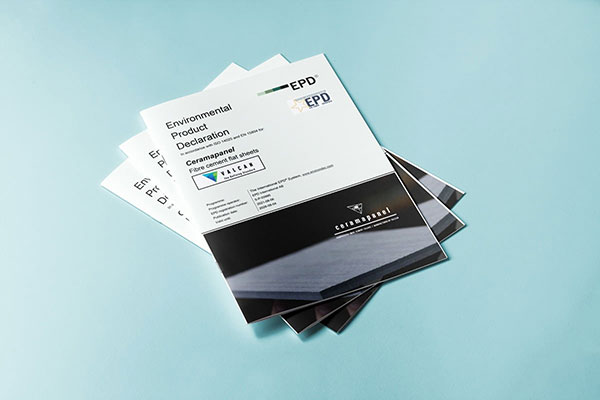
Image © Valcan
What makes EPDs valuable?
“An EPD does not tell you a product is ‘good’ - it tells you what it is. That transparency is precisely where its value lies.”
EPDs deliver value through three core qualities:
• Transparency: Full life cycle impacts are disclosed, from raw material extraction to end-of-life, with no ambiguity.
• Verified data: Information is independently assessed by accredited programme operators, ensuring accuracy and robust methodology.
• Comparability: A consistent framework allows like-for-like comparisons between products, enabling informed material selection.
How is an EPD achieved?
Producing an EPD is a rigorous process involving:
1. Data collection – capturing inputs such as materials, energy, transport and waste
2. Life cycle assessment – modelling impacts across the product lifespan
3 Third-party verification – independent review by an accredited body
4. Publication – making the EPD publicly accessible
This level of rigour is what underpins the credibility of EPD data.
Why EPDs matter
EPDs are rapidly shifting from a ‘nice to have’ to an essential tool for specifiers, architects and planners.
• Compliance is tightening
Evolving UK regulations, including the Future Homes Standard and updates to Part L, are increasing the need for demonstrable environmental performance. EPDs provide the verified data required and are already widely mandated across Europe.
• Better decisions start with better data
EPDs replace assumption with evidence, allowing products to be assessed on a consistent, comparable basis.
• Whole-life carbon is critical
As operational energy reduces, embodied carbon is becoming a larger share of a building’s footprint. EPDs remain the most reliable way to measure and compare this impact.
What this means for housing providers
For housing associations and providers, EPDs support more informed, strategic decision-making.
• Meeting sustainability targets: With increasing pressure from net zero commitments and funding frameworks such as the Social Housing Decarbonisation Fund, EPDs enable procurement aligned with environmental goals.
• Strengthening ESG performance: Independently verified data supports more robust ESG reporting and accountability.
• Improving long-term outcomes: Across large portfolios, material selection has cumulative impact. EPDs allow these decisions to be made on measurable environmental performance, not assumption.
Partnering with manufacturers who take EPDs seriously
The growing availability of EPD-certified products presents a clear opportunity but not all manufacturers have committed to the process.
As a specialist in high-performance façade systems, Valcan recognises the need for verified environmental credentials alongside technical performance.
Two of its flagship systems - Vitradual aluminium cladding and Ceramapanel fibre cement cladding - carry full, independently verified EPD certification. These provide transparent, publicly accessible environmental data built on recognised international standards.
Both systems combine the performance required for modern construction with the documentation needed to support increasingly rigorous procurement processes. Valcan also supplies Frontek, offering further choice across project types and budgets.
The full EPD documentation for Vitradual and Ceramapanel is available via the Valcan website.
Verified environmental data is the standard the industry needs and one Valcan is committed to delivering.
Looking ahead
As the housing sector navigates increasingly complex sustainability requirements, EPDs provide a consistent and credible framework for decision-making.
Choosing manufacturers who invest in EPDs is not simply a technical choice. It is a statement of intent about the buildings we deliver and the standards we set as an industry.
About Valcan
Valcan is a UK specialist in high-performance, sustainable façade systems. Its EPD-certified range, including Vitradual and Ceramapanel, alongside its supply of Frontek, provides architects, specifiers and housing providers with verified environmental credentials and proven technical performance.
www.valcan.co.uk
- Log in to post comments